Description
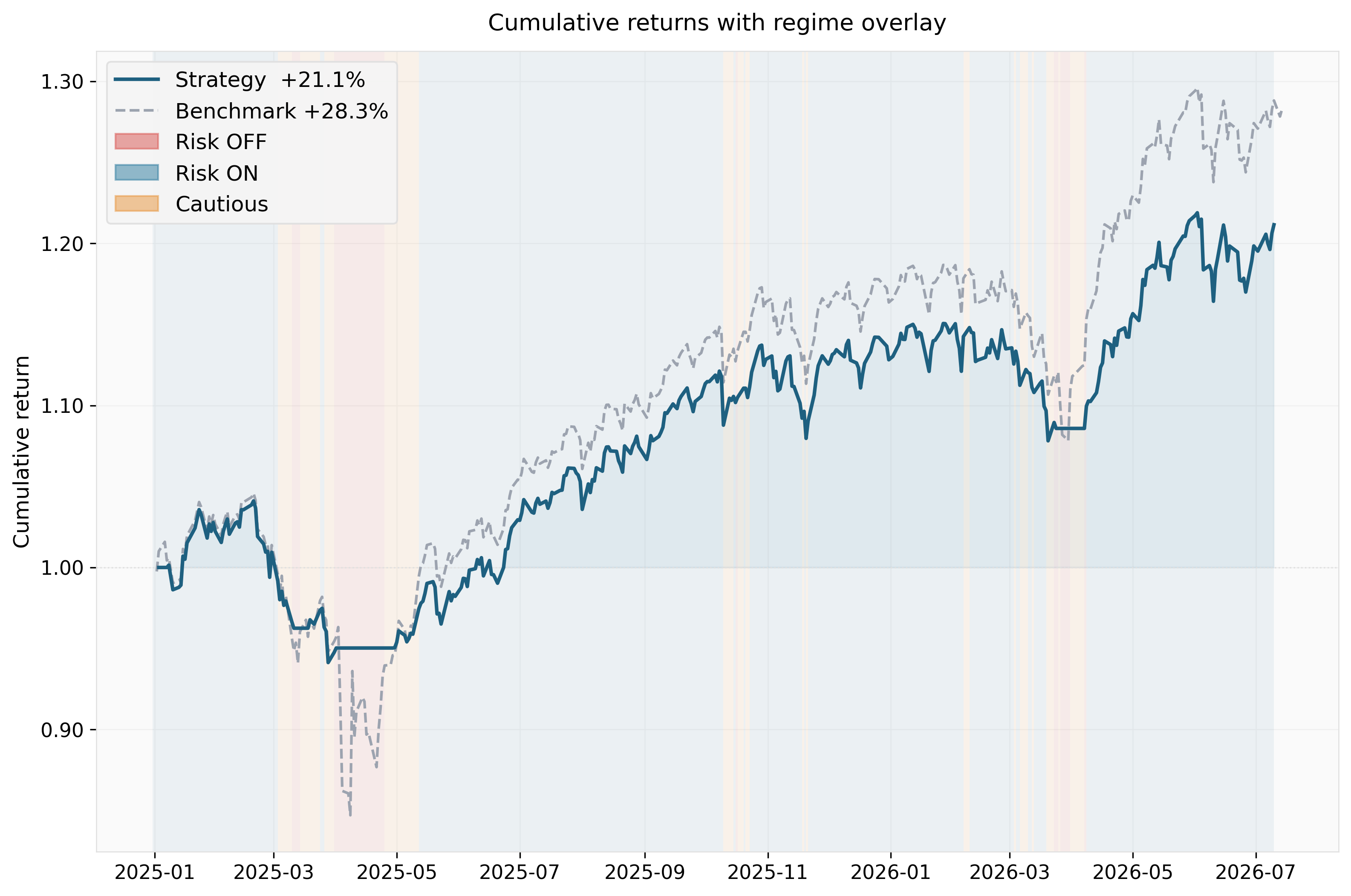
In my previous article, I stress-tested my market regime model on 18 months of live data, including two real corrections, and showed how it cut the market’s drawdown roughly in half by adjusting equity exposure across three states: Risk-On, Caution, and Risk-Off.
But here is the thing: I don’t primarily trade SPY. I sell options. The wheel strategy, seasonal bull put spreads, premium collection. So the natural question is: what does an equity allocation model have to do with selling puts on McDonald’s?
Everything. Because the single biggest mistake option sellers make is not picking the wrong trade. It’s picking the right trade at the wrong size in the wrong environment. This article shows exactly how I translate the three regimes into concrete position sizing rules for my option strategies, and how those rules performed during the February–April 2026 correction.
The Problem: Your Edge Doesn’t Care, But Your Account Does
Let me start with an uncomfortable truth about premium selling.
Short option strategies have a specific return profile: many small wins, occasional large losses. A cash-secured put wins 80% of the time and feels like free money…until the market drops 15% and one assignment wipes out months of premium. The edge is real. The tail risk is also real.
And the tail risk is not evenly distributed in time. It clusters. Volatility expands, correlations spike, and suddenly every underlying in your portfolio moves together. The put you sold on a restaurant stock and the put you sold on a semiconductor stock become the same trade.
Most option sellers respond to this with one of two bad answers. Either they ignore it (“my deltas are small, I’m fine”), or they panic and stop trading entirely when volatility rises, which is exactly when premium is richest.
The regime model gives me a third answer: keep trading, but let the environment dictate the size and the structure. The signal doesn’t come from my emotions or from financial news. It comes from three objective lenses: trend, volatility term structure, and credit conditions. All computed from free data every single day.
If you haven’t read the regime framework article yet, start there: the classification logic is simple enough to fit in one table, and the code is on GitHub. Here I’ll focus on the options layer built on top of it.
The Mapping: One Regime, One Rulebook
The core idea is simple. Each regime answers three questions:
- How much capital am I allowed to deploy in new trades?
- Which structures am I allowed to use?
- What do I do with existing positions?
Here is my mapping.
Risk-On: Full Deployment, Full Menu
When all three lenses are favorable — SPY above its 200-day average, VIX in contango, credit spreads healthy — the environment supports risk-taking. Historically, this is when short puts behave: drawdowns are shallow, assignments are rare, and mean reversion works.
My rules in Risk-On:
- New position sizing at 100% of my standard unit. For the wheel, that means selling cash-secured puts on my watchlist names at full size. For the seasonal strategy, opening every SeasonHunter signal that passes my filters.
- All structures allowed, including undefined-risk ones: cash-secured puts, covered calls, naked strangles on indexes if the setup justifies it.
- Profit targets at my standard levels (typically 75% of max profit for spreads), no accelerated exits.
Risk-On is not a license for greed. It’s a license for normality. My standard unit is already conservative: no single underlying above 5% of the portfolio in assignment value. Risk-On just means I don’t shrink it further.
Caution: Half Size, Defined Risk Only
Caution is the most important regime, and the one most traders don’t have in their playbook. One of the three lenses disagrees with the other two. Maybe the trend is intact but credit is deteriorating. Maybe volatility flipped into backwardation for a week while everything else holds.
The market is telling you: something is off, but it’s not confirmed yet. The worst response is binary thinking: either ignoring the warning or liquidating everything. The regime framework was explicitly built to avoid that trap on the equity side, and I mirror the same philosophy on the options side.
My rules in Caution:
- New position sizing cut to 50% of standard unit. If a setup normally deserves 4 contracts, it gets 2. No exceptions, no “but this one looks great”.
- Defined-risk structures preferred. Directional plays go on as bull put spreads or credit spreads with a bought wing, and I keep the spreads narrow, so the maximum loss is known in advance and it’s small. Short puts are still allowed, but only at reduced contract count and only on names I genuinely want to own at the strike. The wheel doesn’t stop in Caution; it shrinks.
- Shorter duration. I shift toward weekly and 2–3 week expirations instead of the standard 30–45 DTE. In a transitional market, I want optionality to re-price my view often.
- Existing wheel positions stay on, but I get more aggressive selling covered calls against assigned stock, because elevated IV pays me better for the same strikes.
Notice the asymmetry: Caution doesn’t stop me from trading. Elevated IV means the premium is better than in Risk-On. I just demand a defined worst case in exchange for participating.
Risk-Off: No New Risk, Harvest What You Hold
When two or more lenses turn negative, the model goes to zero equity exposure. On the options side, I translate that as: no new short premium positions, period.
This is the rule that saves accounts. In Risk-Off, implied volatility is usually screaming. It can be 25, 30, sometimes higher, and the premium looks irresistible. It’s a trap. In genuine risk-off episodes, correlations go to one, gaps replace orderly declines, and the “high probability” short put becomes a coin flip with terrible payout odds. The fat premium is fat for a reason: it’s pricing the exact scenario you’re in.
My rules in Risk-Off:
- Zero new positions. Not half size. Zero. The discipline must be mechanical, because this is precisely the moment your brain will invent reasons to trade.
- Existing positions: defined-risk spreads run to their stops or targets as planned — that’s why they were defined-risk in the first place. No panic closing, no hope holding.
- Assigned stock from the wheel: I keep it and keep selling covered calls. This is pure harvesting — the position already exists, the cost basis keeps dropping, and sky-high IV makes every call sale meaningful. Reducing cost basis is my risk management on assigned positions.
- The freed-up attention goes into preparation: updating the watchlist, reviewing SeasonHunter signals that will become tradable when the regime improves.
Risk-Off periods are short. In my 18-month test, they totaled only a few weeks across two corrections. Sitting out a few weeks costs very little. Sitting in them can cost a year.
The Worked Example: February–April 2026
Theory is cheap, so let me show you the mapping in action during the most recent correction.
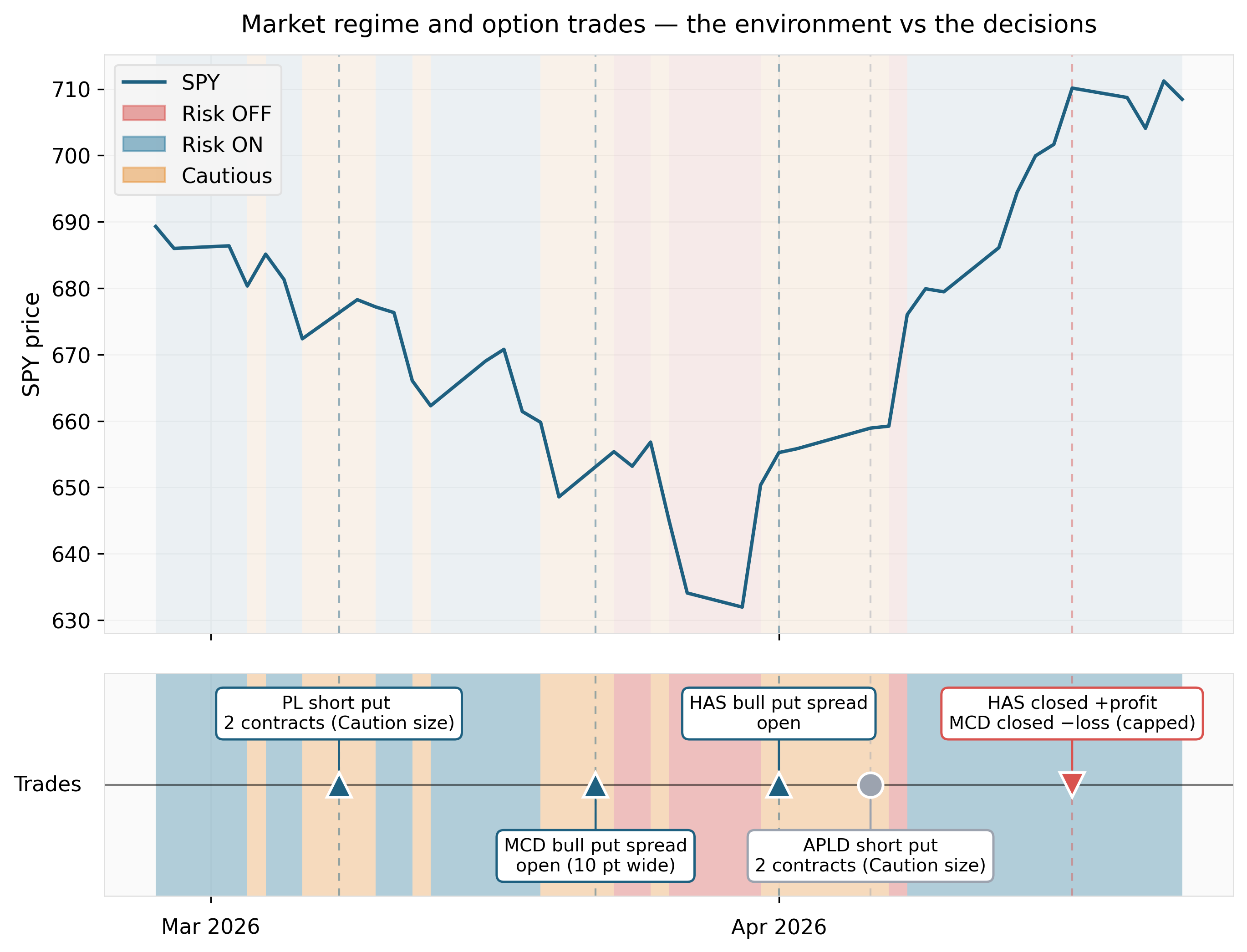
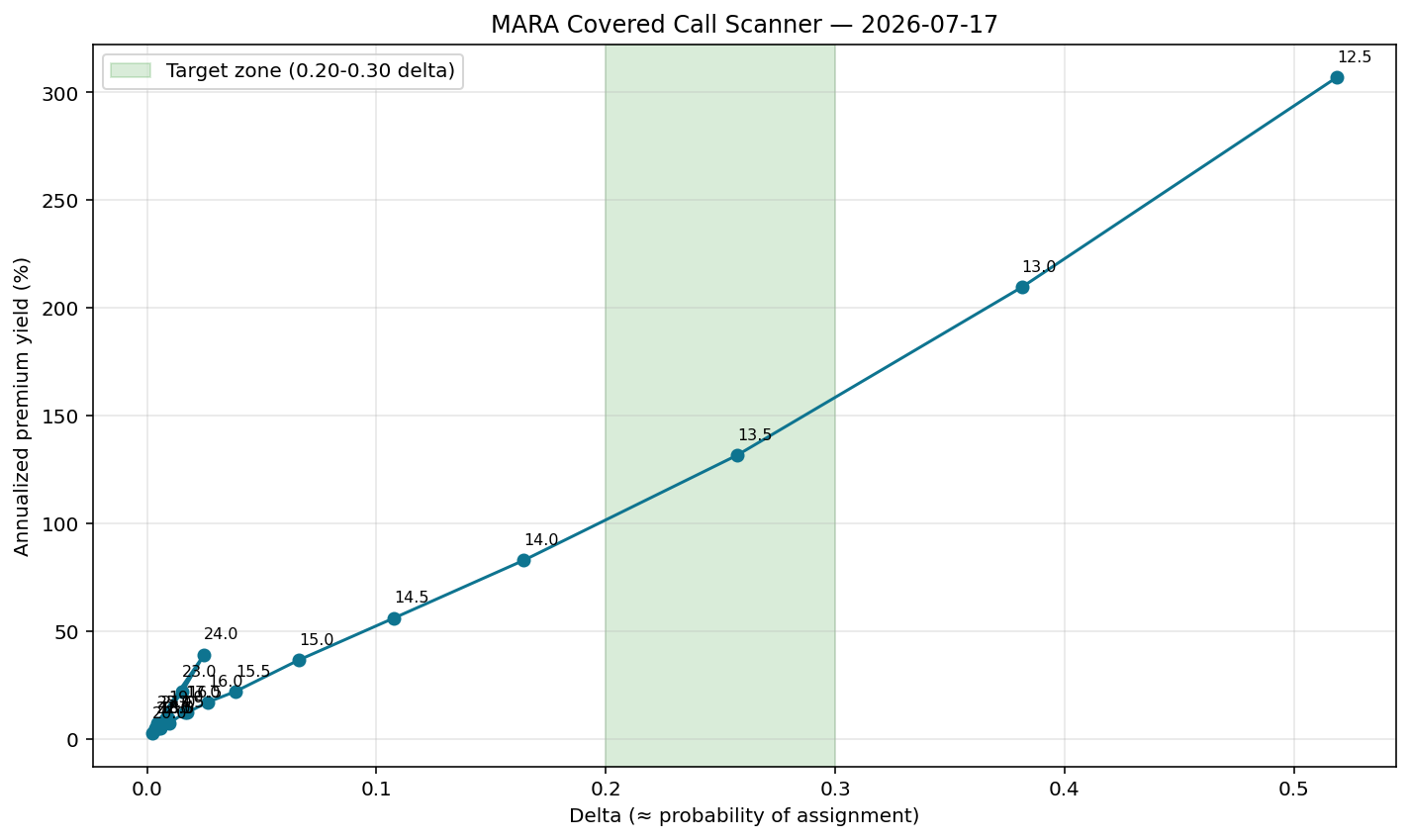
March: the correction hits, the rulebook takes over. SPX fell -4.4%, VIX broke above 25, and the model spent much of the month oscillating between Caution and Risk-Off. New trade activity slowed to a trickle, but the harvesting engine kept running: on my assigned MARA position, elevated IV let me collect $571 in covered call premium in a single month: the richest call premium that position had ever generated. Across the whole wheel portfolio, March delivered $1,715.65 in premiums, offsetting a meaningful part of the unrealized equity losses.
March 8: PL short put, 2 contracts. The first new trade of the correction, and the sizing rule fired immediately. PL is a wheel candidate I’m happy to own at the strike, and the elevated IV made the put attractive. In Risk-On this would have been a full-size position. With the model in Caution, the rulebook allowed the trade, but at half size: 2 contracts instead of my standard unit.
March 22: MCD bull put spread. SeasonHunter had flagged the McDonald’s seasonal window (March 22 – May 6, one of the most reliable patterns in 56 years of data — see my dedicated article), and I entered on the very first day of the window. The edge said trade. The regime said trade carefully. So the position went on as a defined-risk bull put spread, only 10 points wide. This is not a naked put, not a wide spread. Maximum loss known to the dollar before entry.
April 1: HAS bull put spread. Second seasonal signal, same treatment: defined-risk, narrow spread, Caution sizing. Combined credit collected on the two seasonal trades: $650.
April 6: APLD short put, 2 contracts. Another wheel candidate at an attractive strike with juicy IV, and another mechanical application of the same rule: 2 contracts, half size. Notice the pattern here. PL and APLD are two different stocks, entered a month apart, in different phases of the correction. The sizing decision was identical, because the regime was identical. Not because I felt nervous. Because the model said Caution.
April 17: both seasonal trades closed. And here is the honest part. HAS closed in profit. MCD closed at a loss. The famous seasonal pattern, 56 years of data behind it, an entry on day one of the historical window, and the trade still lost. Because no edge wins every time, and a correction is exactly when historical patterns get overridden by fear.
But look at what the loss actually cost. Ten points of spread width, Caution sizing. The maximum damage was defined, small, and pre-accepted on March 22, almost four weeks before I knew the outcome. HAS’s profit and the wheel’s premium flow absorbed it without drama. That is the entire point of this framework: the exposure was right, so the outcome didn’t matter. A wrong trade at the right size is a business expense. A right trade at the wrong size is how accounts die.
Late April: back through Caution toward Risk-On. As volatility compressed and the lenses turned green one by one, sizing stepped back up mechanically: half size, then full size. No gut feeling required. The recovery was captured with positions already scaling in.
Why This Works: Structure Beats Forecasting
Step back and look at what the regime layer actually does for an option seller:
It matches structure to tail risk. Full-size, undefined-risk trades are only permitted when tail risk is historically lowest. As the environment degrades, the rulebook forces narrower spreads, fewer contracts, and structures whose worst case is known — MCD’s 10-point spread is the textbook case.
It sizes down before you feel pain, not after. Most traders cut size in response to losses, which means after the damage. The regime model cuts size in response to conditions, which typically deteriorate before the worst losses arrive. Credit spreads, in particular, tend to widen early.
It solves the premium-seller’s paradox. High IV is attractive but dangerous. The framework resolves it cleanly: harvest elevated premium on positions you already own (covered calls on assigned stock), but refuse new short premium until conditions stabilize. You get paid by the volatility without being newly exposed to it.
It removes the decision from the moment. Every rule above was written in calm conditions. In the middle of a correction, I don’t decide anything. I look up the regime and read the rulebook. Discipline is easy when it’s mechanical.
Final Thoughts
The market regime model started as an equity allocation framework — that’s how Gaetano and I published it in Technical Analysis of Stocks & Commodities. But its real value in my own trading is as an environmental filter for everything else I do. The same three lenses that decide SPY exposure decide whether my next options trade is a full-size cash-secured put, a half-size bull put spread, or no trade at all.
None of this improves any individual trade. The MCD seasonal edge is the same edge in every regime. What changes is the survivability of the whole system: full participation when conditions support it, capped downside when they’re mixed, and zero new exposure when the market is actively dangerous.
In options trading, your win rate makes you feel smart. Your position sizing in the bad months determines whether you’re still trading next year. The regime model handles the second part, so I can focus on the first.
The regime classification code is on GitHub, and it runs on free data. Add your own sizing rulebook on top — yours doesn’t have to match mine, it just has to exist before the next correction, not during it.
This is the mindset behind The Quantitative Edge — simple ideas, implemented cleanly, that scale into powerful tools for data-driven trading.
Statemi bene!