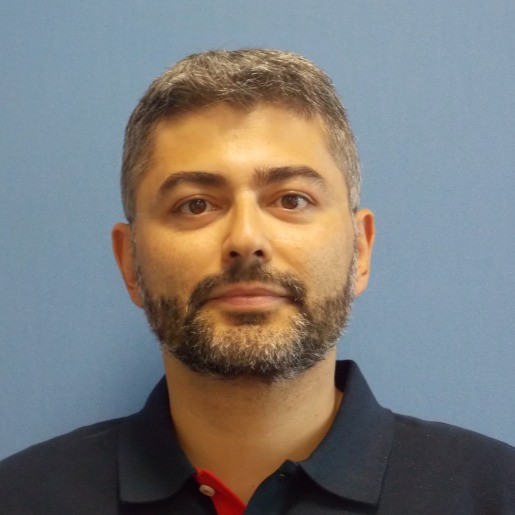
Hi, I’m Fabio.
I’m a PhD physicist, quantitative trader, and the person behind The Quantitative Edge.
I apply a scientist’s rigour to financial markets, and I share everything: the code, the data, the losses, and the wins.
The origin story
It started with a curiosity question I couldn’t stop thinking about: could the same methods I used to simulate quantum systems be applied to financial markets?
I had spent 20 years in physics and high-performance computing. I had fun building models, running simulations, interpreting noisy data. In the meantime, I always had deep interest in the financial markets, which looked like a harder and messier version of the same problem.
So I decided to try something, I do not know what, I did not have a clear plan in mind, but I just started. In 2019, I run my first systematic backtest on seasonal price patterns. I was proud of what I had built and the results surprised me: some patterns showed win rates above 70% across more than 40 years of historical data. But that raised an even more important questions:
- Why is this happening?
- What is the driving force behing this pattern?
- Can I use this edge to profit on the market?
The deeper I looked, the more I realized they weren’t just lucky coincidences. Many were tied to recurring business cycles, earnings schedules, and predictable institutional behavior. The patterns kept repeating because the forces behind them kept repeating too.
That was the moment I knew this was worth pursuing seriously.
The career
- PhD in Quantum Computing Simulations — University of Regensburg
- Research scientist at CINECA, Jülich Forschungszentrum, Leibniz Supercomputing Centre, and Max Planck Computing and Data Facility — 10+ peer-reviewed publications
- HPC Specialist at Intel Corporation — helping research institutions scale computation
- Specialist Solutions Architect at Amazon Web Services — cloud HPC and quantum computing adoption
- Lead Cloud Consultant at MPCDF — modernising computational infrastructure for research groups across Europe
Across these roles, I’ve worked at the intersection of rigorous scientific methods and large-scale computational systems.
Trading is where I apply the same principles again.
The pivot moment
Years of working with large-scale computational systems taught me how to think systematically, write reliable code, and validate results rigorously. When I eventually turned that mindset toward trading, I started with options—selling premium, studying volatility, and trying to understand market microstructure from first principles.
What I quickly noticed, while learning a new topic and trading at the same time, was a gap. Most retail options content was either too vague (“sell when IV is high”) or too abstract to be useful in practice. Very few people were showing the full chain: real data, real code, real testing, and rarely connected it to actual trades. That gap pulled me in.
I decided to build and show what systematic trading really is.
The philosophy
I don’t try to predict markets. I study their structure.
A physicist doesn’t guess where a particle will end up, they build a model, test it against data, and update when it’s wrong. I approach trading the same way. Every strategy I use has a causal explanation, historical evidence, and defined risk.
There are three things I care about:
- Systematic edge — patterns rooted in repeatable market behavior
- Defined risk — knowing the worst case before entering a position
- Capital efficiency — using options as leverage while keeping losses strictly bounded
What I’ve built
- SeasonHunter — a seasonal platform to screen and evaluate 3,000+ instruments across 365 calendar entry windows and 30+ years of data to surface statistically robust seasonal patterns
- The Quantitative Edge — systematic options strategies, Python implementations, and real trade breakdowns published every week
- The newsletter — live trade setups, seasonal signals, and monthly market analysis delivered to systematic traders
Why I share it
I’m not selling a dream. I trade my own capital using exactly what I write about. When a trade loses, I look at why. When a strategy underperforms, I publish the data and the reasoning behind it.
The goal is simple: help systematic traders build a process that doesn’t depend on prediction, intuition, or luck, but instead on evidence, structure, and repeatability.
Statemi bene!
Fabio